
Words
Published
When you’re first diagnosed with keratoconus, family members inevitably ask: “What can you actually see?” It’s a simple question with a complex answer, because every person’s experience of keratoconus is unique. The condition affects each eye differently – even your left and right eyes can have vastly different visual experiences.
In my case, I can see quite a lot, especially up close. The keratoconus in my left eye isn’t severe, which means I can read books and newspapers without any visual aids. It’s distance vision where things start to deteriorate, and where my experience of the world becomes distinctly different from someone with healthy corneas.
The ghosting effect
Objects in the distance don’t appear blurred in the traditional sense. Instead, they have ghosting shapes around them – almost like duplicate images positioned either above or below the original, rather than being in focus.
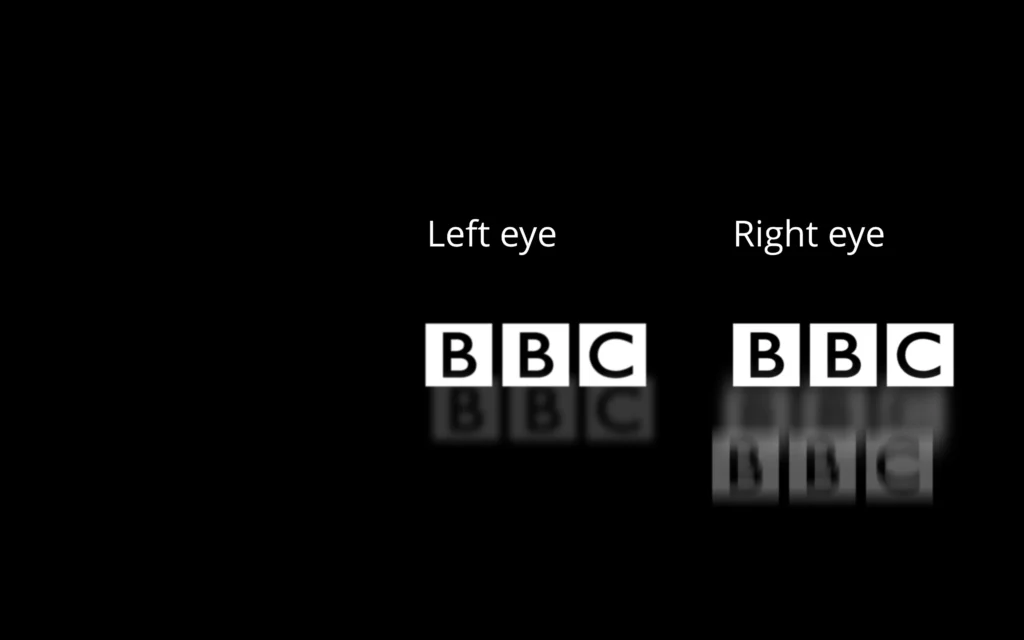
Take the BBC logo on my television as an example. The image itself isn’t blurred, but I see what can best be described as reflections of the logo beneath it. With my left eye, there’s a neat ghosting effect slightly below and to the right of the logo. When I look through my right eye, however, the effect is much more pronounced – the entire image appears reproduced beneath the logo.
When I showed this phenomenon to my optometrist, he was fascinated. None of his other keratoconic patients had ever been able to visually document how they saw the world. This highlights just how individual each person’s keratoconus experience is, and why personalised treatment approaches are so important.
How the brain compensates
Interestingly, my brain somehow manages to make the best of both images from my left and right eyes. It’s a remarkable example of neuroadaptation – the brain’s ability to process and reconcile conflicting visual information. However, for long-distance vision, I still require visual aids to see clearly.
The difference visual aids make
When I use visual aids, the world becomes much more in focus. Glasses are comfortable and convenient for everyday wear, but contact lenses are what really transform my vision – especially in my right eye, which has more advanced keratoconus. The improvement is dramatic, allowing me to see distant objects without the ghosting and duplication that otherwise characterises my visual world.
If you’re experiencing similar visual distortions, or if you’ve been diagnosed with keratoconus and want to explore your treatment options, contact our Sydney practice to discuss how we can help improve your vision and quality of life.