
Article summary
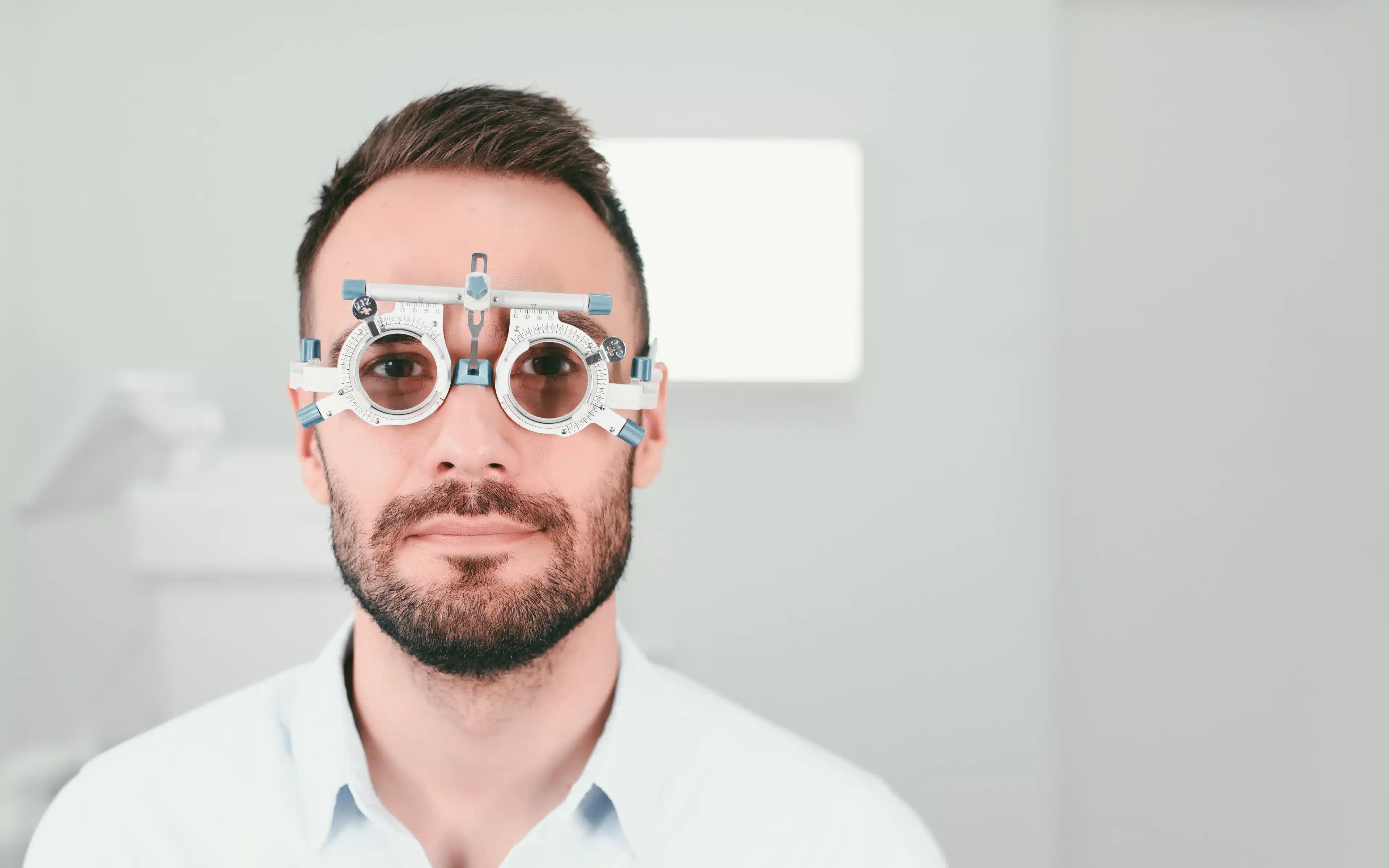
The Eye Practice, in Sydney's CBD, offers comprehensive eye tests focused on early detection. Hour-long appointments include:
- Visual acuity and refraction assessment
- Screening for glaucoma, macular degeneration, diabetic retinopathy, keratoconus and cataracts
- Tear film and dry eye evaluation
- Medicare rebates and on-site health fund claims
Testing frequency ranges from annual to every two years.
Advanced eye tests in Sydney
Evaluating visual acuity and overall eye health
Most people book an eye test when they notice something is wrong. After three decades examining eyes in Sydney’s CBD, we encourage you to reconsider that approach. The conditions that threaten vision most seriously – glaucoma, macular degeneration, diabetic retinopathy, keratoconus – are almost entirely without warning in their early stages. By the time you notice something has changed, opportunity for intervention has often already narrowed.
Our comprehensive eye tests in Sydney are built around a different premise: finding problems before you feel them, and giving you the information you need to protect your vision for the long term.
Today’s hours: 8:30 AM - 5:00 PM. Call to book an appointment on: +61 2 9290 1899
Why a thorough eye test is not just about seeing clearly
There is a widespread assumption that an eye test is simply a check of how well you read a chart. That matters, of course – if you need glasses or contact lenses, a precise prescription makes a measurable difference to your daily comfort and performance. But vision correction is only one component of what we do.
A comprehensive eye test is a detailed assessment of your ocular health. We are looking at the structures inside your eyes, the pressure within them, the health of your retina, the condition of your cornea, and the quality of your tear film. Any one of these can reveal early signs of conditions that, if left untreated, lead to irreversible sight loss.
In Australia, an estimated 300,000 people are living with glaucoma – and around half of them do not know it. Macular degeneration affects one in seven Australians over 50 and remains the leading cause of legal blindness in this country. Diabetes, now affecting more than 1.3 million Australians, can damage the retina silently for years before a person notices any visual change. These are not rare conditions. They are exceptionally common, and they are disproportionately manageable when caught early.
What we examine during your appointment
A comprehensive eye test at our practice typically takes about one hour for new patients and for annual appointments. That time is deliberately allocated – it cannot be meaningfully compressed. Here is what we cover.
We begin with your history: your current symptoms if any, your general health, any medications you take, and your family history of eye disease. Family history is particularly relevant for glaucoma, macular degeneration and keratoconus, all of which have a significant genetic component.
We then assess visual acuity at both distance and near, followed by a refraction to determine whether you need vision correction and – if you already wear glasses or contact lenses – whether your current prescription remains accurate. Many people are surprised to discover their prescription has drifted without their noticing.
Beyond that, we use advanced diagnostic imaging to examine the structures of your eyes in detail. Our equipment includes technology not commonly available in standard optical retail environments. We measure intraocular pressure, assess the optic nerve, examine the retina and macula, and evaluate the cornea for early signs of conditions such as keratoconus. We also assess binocular function – how well your eyes work together – which is frequently implicated in headaches, eyestrain and reading difficulties.
For patients with relevant symptoms or risk factors, we include an assessment of the tear film and ocular surface. In Sydney’s climate, with its combination of high UV levels, air conditioning and screen-heavy work environments, dry eye disease is far more prevalent than many patients realise.
The conditions we look for
Our comprehensive eye tests in Sydney are specifically oriented toward early detection of the following conditions.
Glaucoma is caused by damage to the optic nerve, most commonly associated with elevated pressure inside the eye. It produces no pain and no visual symptoms until significant, irreversible damage has occurred. Our testing includes pressure measurement and optic nerve assessment to identify risk and disease at the earliest possible point.
Macular degeneration affects the central area of the retina responsible for sharp, detailed vision. Australia has one of the highest rates of this condition globally, partly attributable to our high UV environment. Early detection allows us to recommend protective strategies and, where appropriate, refer for treatment to slow progression.
Diabetic retinopathy is damage to the tiny blood vessels of the retina caused by elevated blood sugar. It can develop without symptoms, and it is among the most preventable causes of vision loss in working-age adults. We recommend annual testing for all patients with diabetes.
Keratoconus is a progressive thinning and distortion of the cornea that typically begins in adolescence or early adulthood. Many patients spend years in deteriorating glasses prescriptions before anyone identifies the underlying cause. Modern diagnostic imaging allows us to detect corneal changes before they significantly affect vision – at which point management options are substantially broader.
Cataracts develop gradually as the lens of the eye becomes cloudy. Australia’s high UV exposure accelerates this process relative to populations in lower-UV environments. Regular testing allows us to monitor progression and advise on the right time to consider surgical assessment.
Dry eye disease is frequently missed in routine vision checks but profoundly affects quality of life. We assess the tear film and meibomian gland function as part of our comprehensive examination, particularly for patients who work extensively with screens, wear contact lenses, or experience persistent discomfort.
How often should you have your eyes tested?
The right interval varies by individual. As a general guide, adults with no known risk factors or existing conditions benefit from a comprehensive eye test every one to two years. Those who wear glasses or contact lenses should be tested annually to ensure their prescription remains current. Patients with diabetes, a family history of glaucoma or macular degeneration, elevated intraocular pressure, or a personal history of eye disease warrant more frequent review – typically every six to twelve months or as guided by their test findings.
Children’s eyes require particular attention. Vision problems in childhood affect learning, coordination and development in ways that are not always obviously eye-related. We recommend an assessment before school entry and every year or two thereafter, or sooner if a parent or teacher has identified a concern.
For adults over 60, annual examinations are advisable as the risk of age-related conditions increases significantly with each decade.
Why Sydney’s environment makes eye health a particular priority
Australia has among the highest UV radiation levels on earth, and Sydney is no exception. Prolonged UV exposure is a well-established risk factor for cataracts, macular degeneration and pterygium – a growth on the surface of the eye that, while often benign, can distort vision and cause persistent irritation.
Sydney’s working culture also carries its own ocular demands. CBD office environments are heavily air-conditioned and typically involve extended screen use – both of which compromise the tear film and contribute to dry eye disease. Our patient population reflects this: a substantial proportion of people presenting with eye discomfort have occupational factors at the root of their symptoms.
Myopia – short-sightedness – is also increasing at a striking rate in Australia, as it is globally. In urban environments like Sydney, where children spend more time indoors and less time in natural light, the trajectory is steeper still. For parents of school-age children, regular eye testing and early intervention where myopia is identified gives us the best available opportunity to slow its progression.
Medicare rebates and private health cover
In Australia, comprehensive eye tests are covered by Medicare when performed by a registered optometrist. This means you are entitled to a Medicare rebate on your appointment – a benefit that is poorly understood and underutilised by many patients who assume eye care is an out-of-pocket expense.
If you hold private health insurance with extras cover that includes optical, you may also be entitled to a benefit on prescription glasses or contact lenses prescribed as a result of your test. We support on-site instant claims for all major health funds, so you receive your entitlements at the time of your visit.
We are located in the Sydney CBD at 83 York Street – accessible by train, bus and light rail from across the metropolitan area.
What your prescription tells us
If your eye test reveals that vision correction is needed, your prescription is a precise map of your optical requirements. The numbers and notations on a glasses or contact lens prescription describe the degree of short-sightedness, long-sightedness, astigmatism and, for patients over 40, the additional reading correction required.
We take time to explain what your prescription means in practical terms – which optical corrections are available, what the tradeoffs between different lens types look like, and how your visual needs may change over time. Understanding your own prescription is the first step to making informed choices about your eyewear and contact lenses.
Beyond the standard test: specialist services
Our practice offers a range of specialist diagnostic services that extend considerably beyond standard vision testing. For patients presenting with or at risk of keratoconus, we use corneal topography and tomography to map corneal shape with high precision. For those with complex or treatment-resistant dry eye, we offer access to advanced therapies including IPL and LLLT. For patients considering laser eye surgery, we perform comprehensive pre-operative assessments to determine candidacy and identify risk factors.
These capabilities reflect the fact that not every presenting eye problem is straightforward, and not every patient is well served by a generic approach. Our experience with complex conditions means that patients referred to us by GPs and other optometrists can expect a higher level of diagnostic scrutiny.
Book your eye test in Sydney’s CBD
Eye tests Sydney patients can rely on for clinical thoroughness, specialist-level technology and a genuine commitment to long-term eye health. We are conveniently located in the heart of the Sydney CBD and are open to new patients.
To book your comprehensive eye test, call us on +61 2 9290 1899 or book online.
About the Author: Dr Jim Kokkinakis

More information

Glaucoma eye tests in Sydney: comprehensive care
Early detection of glaucoma can save your sight. This silent thief of vision affects over 300,000 Australians, with half undiagnosed.

Diabetic eye tests in Sydney: protecting your vision from diabetes complications
Regular diabetic eye testing is essential for safeguarding your vision – detecting retinopathy before symptoms appear and preserving sight.
Cataract eye tests in Sydney
Cataract eye tests using advanced diagnostic technology detect early cataracts before vision significantly deteriorates.

Sydney laser eye surgery assessment: Is it right for you?
An independent laser eye surgery assessment at The Eye Practice evaluates corneal shape, dry eye, prescription stability, and more – giving Sydney patients honest, clinically grounded advice before they commit to surgery.
Macular degeneration tests in Sydney: comprehensive AMD screening
Advanced AMD screening using cutting-edge diagnostic technology can detect macular degeneration early and protect your vision.
Eye tests Sydney: comprehensive optical care
Most serious eye conditions — glaucoma, macular degeneration, diabetic retinopathy — develop without warning. Our comprehensive eye tests in Sydney's CBD use advanced diagnostics to find problems before you feel them, and before treatment options narrow.