Words
Published
Why ocular rosacea is one of the most overlooked causes of dry eyes
If your eyes feel persistently gritty, burning or red – and you’ve been told you simply have dry eyes – there’s a good chance something more specific is going on. After three decades in clinical practice, one condition I still see misdiagnosed and overlooked far too often is ocular rosacea. It is one of the most underappreciated drivers of chronic dry eye disease, and understanding the connection can make a real difference to your treatment outcomes.
What is ocular rosacea?
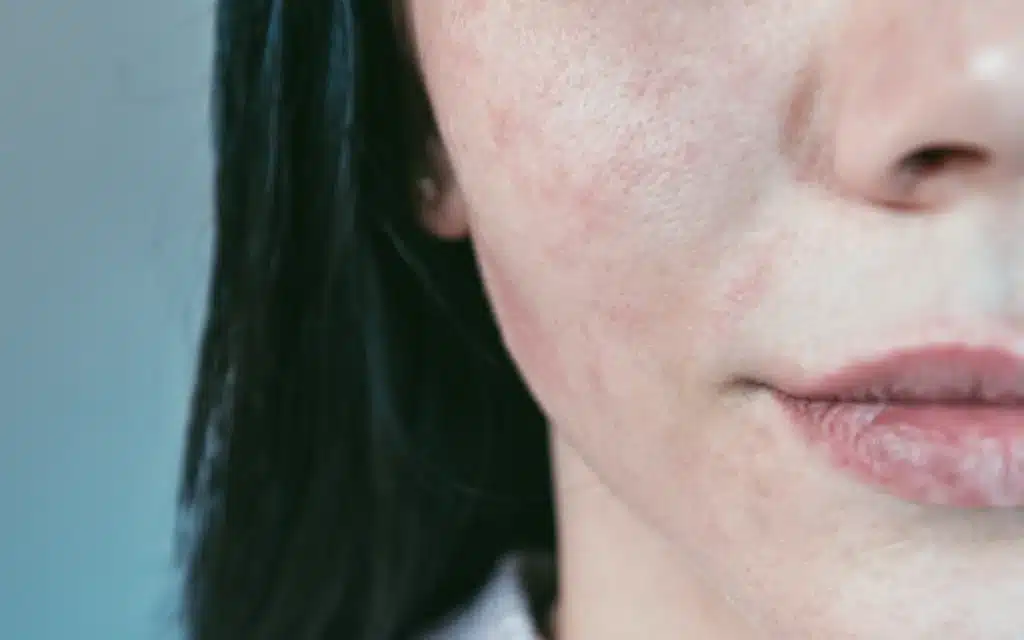
Most people have heard of rosacea as a skin condition – the facial flushing and redness that commonly affects the cheeks, nose and forehead in fair-skinned individuals, often in middle age. What many people don’t realise is that rosacea frequently affects the eyes. In some patients, eye symptoms may appear before obvious skin changes develop, which can lead to prolonged or ineffective dry eye treatment without addressing the underlying inflammatory process.
Ocular rosacea is characterised by chronic inflammation of the eyelid margins, affecting the meibomian glands, ocular surface and the tear film. The key mechanism is dysfunction of the meibomian glands – the tiny oil-producing glands that line the upper and lower eyelids. These glands produce the oily layer of the tear film that slows evaporation. When they become blocked or inflamed, inadequate amounts of meibum reach the ocular surface, the tear film becomes unstable, and tears evaporate far too quickly, causing persistent irritation.
Symptoms – more than just dry eyes
Dry eyes are one of the most common complaints, but ocular rosacea produces a wider range of symptoms that can vary considerably between patients and fluctuate over time. These include:
- a burning or stinging sensation
- persistent redness of the eyes or eyelids
- grittiness or a feeling that something is lodged in the eye
- sensitivity to light
- intermittently blurred vision that often clears after blinking
- recurring styes or chalazia – those stubborn lumps on the eyelid that are a hallmark of chronically inflamed meibomian glands
It is worth noting that the severity of eye symptoms does not always reflect the severity of skin involvement; some patients have pronounced ocular rosacea with barely a hint of facial redness.
Causes and risk factors
The precise cause of ocular rosacea is not fully understood, and it is likely multifactorial. Hereditary predisposition plays a role, as does bacterial involvement. One theory holds that bacteria affecting the meibomian glands release inflammatory compounds that degrade the tear film. Demodex mites – microscopic organisms that inhabit eyelash follicles – are also thought to contribute to the inflammatory cycle in susceptible individuals.
Ocular rosacea triggers
Ocular rosacea is most prevalent in adults between 30 and 50 years of age, affects men and women equally, and is more common in fair-skinned people of Celtic and Northern European descent. A number of triggers are well-established: alcohol, spicy food, heat exposure, strenuous exercise, stress and sunlight can all provoke or worsen flare-ups.
Why Australian conditions make it worse
Living in Australia adds an extra layer of challenge. Our climate – intense UV exposure, low humidity and dry winds – places the tear film under considerable stress at the best of times. For someone with ocular rosacea, these environmental factors can trigger or intensify flare-ups. Heat is a particularly potent rosacea trigger, meaning warmer and drier Australian conditions can aggravate flare-ups in ways that patients in cooler, more humid climates simply don’t experience to the same degree.
Complications of untreated ocular rosacea
Left unmanaged, ocular rosacea can progress well beyond irritation. Chronic inflammation of the eyelid margins can cause misdirected eyelashes that abrade the cornea, and persistent dry eyes from rosacea accelerate tear evaporation to the point where the corneal surface is at risk. Other symptoms of advancing disease include fluctuating vision, tearing, and stinging or itching. In more advanced cases, corneal complications can cause lasting visual changes – which is why early diagnosis and consistent management matter.
How dry eyes from rosacea are treated
The good news is that ocular rosacea is very manageable once correctly identified. One thing worth knowing upfront: despite being widely recommended, warm compresses are often counterproductive for ocular rosacea. Because the condition is fundamentally inflammatory in nature, applying heat to already inflamed eyelids can dilate blood vessels, bring more inflammatory cells to the area and make symptoms worse. Cool compresses are generally a far better option for managing active inflammation. It is best to consult your optometrist to determine the underlying cause of your dry eye disease before commencing any home treatment.

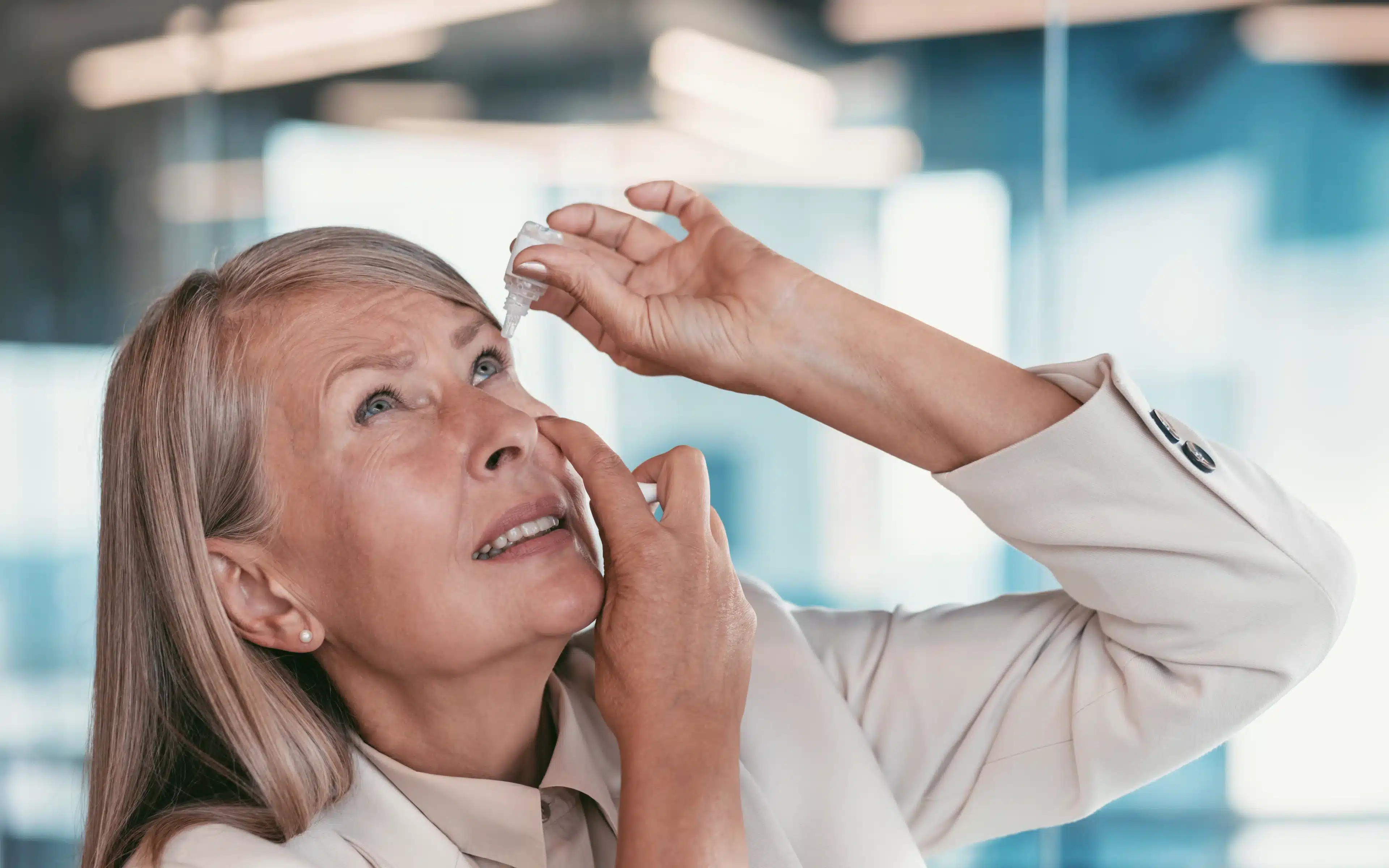
Daily eyelid hygiene using a hypoallergenic, optometry-approved lid cleanser – rather than baby shampoo, which is a mild detergent that can itself cause irritation – forms an important part of management for patients with anterior blepharitis or Demodex. Preservative-free lubricating drops can also be beneficial for patients with low tear volume, contact lens wearers or those with consistent environmental exposure. For more moderate disease, a short course of prescription low-dose oral azithromycin – available through your GP – can help calm the underlying inflammation effectively.
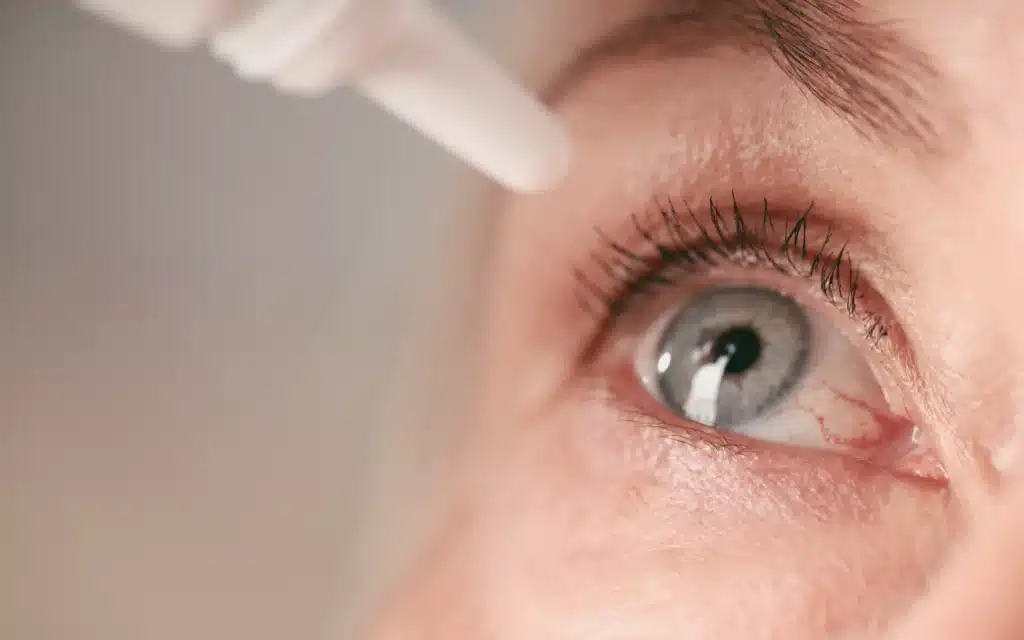
For patients who need more than home management can provide, in-office light-based therapies offer significant benefits. At The Eye Practice, we offer both intense pulsed light (IPL) therapy and low level light therapy (LLLT). IPL works to reduce the abnormal blood vessels and inflammation around the eyelids that damage the meibomian glands, while LLLT helps to reactivate and rejuvenate the glands themselves, boosting cellular activity while reducing inflammation. Used together, they deliver results that lubricating drops and conventional measures simply cannot achieve. Research published by Mayo Clinic investigators has demonstrated meaningful improvements in dry eye symptoms from IPL combined with meibomian gland expression compared with gland expression alone, and our clinical experience reflects this.
When to seek help
If you have persistent dry, red or irritated eyes – particularly alongside a history of facial flushing, skin sensitivity or recurring styes – it’s worth asking your optometrist whether ocular rosacea might be contributing. A thorough dry eye assessment, including evaluation of meibomian gland function, will give you a clearer picture of what’s happening and point the way to treatment that actually addresses the root cause.
About the Author: Jim Kokkinakis