
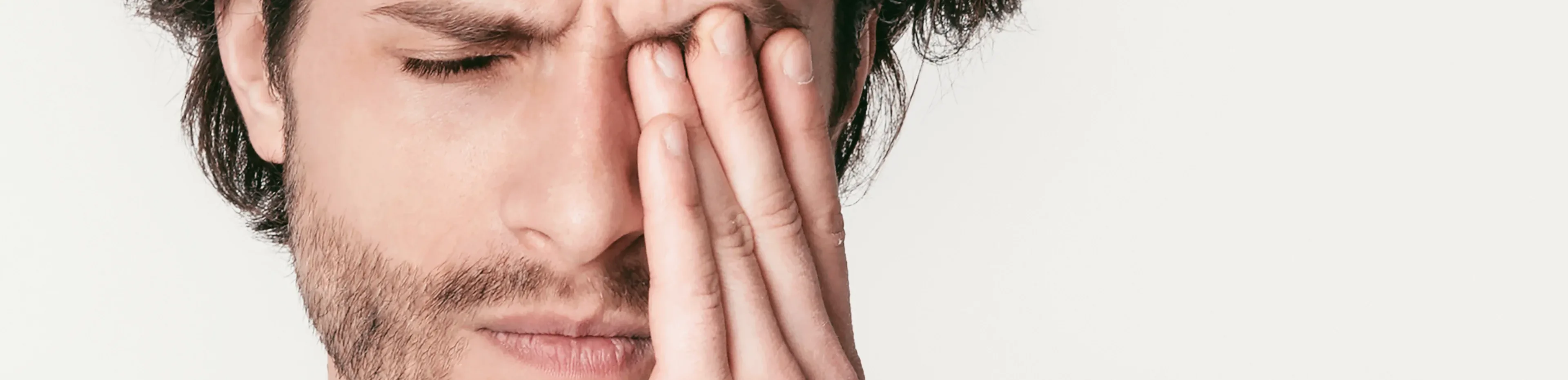
Dry eye testing in Sydney that goes beyond the surface
Dry eye disease affects more Australians than most people realise – and in a city like Sydney, with its harsh UV exposure, strong coastal winds, air-conditioned offices, and long hours spent on screens, the conditions for dry eye couldn’t be more favourable. Yet for all its prevalence, dry eye remains one of the most undertested and undertreated conditions in optometry. After three decades managing complex dry eye cases, Dr. Jim Kokkinakis has come to believe that the quality of a patient’s testing is the single greatest predictor of whether their treatment will succeed.
The reason is simple. Dry eye is not a single condition – it’s a family of conditions with overlapping symptoms but different underlying causes. Without a thorough, systematic assessment, treatment becomes little more than guesswork. At The Eye Practice, the team doesn’t treat symptoms. They treat the cause.
Why dry eye testing matters before treatment
The first thing Dr. Kokkinakis tells patients who arrive at the Sydney practice is that their eye drops, warm compresses, or previous treatments may have been failing them for a very specific reason: nobody determined what kind of dry eye they actually have.
Broadly speaking, dry eye disease falls into two main categories. Aqueous-deficient dry eye occurs when the lacrimal glands don’t produce enough of the watery component of the tear film. Evaporative dry eye – by far the more common type – occurs when the meibomian glands in the eyelids fail to produce enough of the oily lipid layer that prevents tears from evaporating too quickly. In practice, many patients have a combination of both. Getting this distinction right is essential, because the treatment pathways are fundamentally different.
There are also important complicating factors to consider – medications, autoimmune conditions, hormonal changes, environmental exposures, and sleep habits among them. A dry eye assessment that doesn’t account for these factors will produce incomplete results.
The two types of dry eye – and why Sydney patients are especially vulnerable
Australia’s climate poses particular challenges. Sydney’s intensity of UV radiation, low winter humidity, and the near-ubiquity of air conditioning in CBD offices all accelerate tear evaporation. Pollen seasons are prolonged compared with many Northern Hemisphere cities, and the prevalence of rosacea – one of the strongest drivers of evaporative dry eye via meibomian gland dysfunction – is as high here as anywhere in the world.
The Eye Practice regularly sees patients who have been managing their symptoms with lubricating drops for years. In many cases, what they actually need is treatment for meibomian gland dysfunction (MGD) – a completely different problem that eye drops alone will never resolve. The distinction only becomes clear through proper testing.
The dry eyes testing process at The Eye Practice, Sydney
The dry eye assessment at The Eye Practice is one of the most comprehensive available in Australia. It draws on multiple diagnostic tools that, used together, paint a complete picture of the ocular surface and tear film. No single test tells the whole story – it is the combination of findings that guides precise, effective treatment.
OSDI questionnaire
Every assessment begins with the Ocular Surface Disease Index (OSDI) questionnaire – a validated, internationally recognised tool that quantifies dry eye severity on a scale of 0 to 100. Higher scores reflect greater symptom burden. Completing the OSDI serves two purposes: it establishes a baseline against which treatment progress can be measured, and it helps ensure that the severity of a patient’s symptoms is properly documented and taken seriously from the outset.
Comprehensive history and medication review
Many patients arrive at The Eye Practice having been on medications for years without anyone investigating whether those medications might be contributing to their dry eyes. Antihistamines, antidepressants, blood pressure medications, oral contraceptives, isotretinoin, and a range of other commonly prescribed drugs can all reduce tear production or alter tear film stability. A thorough medication review is a non-negotiable part of any serious dry eye assessment. So too is a broader health history – thyroid dysfunction, autoimmune conditions such as Sjögren’s syndrome, rheumatoid arthritis, and lupus all have well-established associations with dry eye disease.
Slit lamp examination
A high-magnification slit lamp examination allows the practitioner to assess the health of the ocular surface in detail – including the cornea, conjunctiva, and eyelid margins. Signs of inflammation, blepharitis, blocked meibomian gland orifices, and damage to the surface of the eye can all be identified at this stage. The slit lamp is the foundation of any clinical eye assessment, and in the context of dry eye, it often reveals findings that would otherwise go unnoticed.
LipiView – lipid layer and blink analysis
The LipiView interferometer is one of the most powerful tools in The Eye Practice’s dry eye arsenal. It measures the thickness of the lipid (oily) layer of the tear film with a precision that simply isn’t possible by clinical observation alone. A thin or unstable lipid layer is the hallmark of evaporative dry eye caused by MGD, and LipiView quantifies this objectively.
Equally importantly, LipiView uses high-speed imagery to analyse the way a patient blinks – including the completeness of each blink. Incomplete blinking is a surprisingly common and frequently overlooked contributor to dry eye, particularly in people who spend long hours on screens. If blinks are consistently partial, the lower portion of the cornea is repeatedly left unlubricated. LipiView detects this and, in doing so, opens up a whole new dimension of treatment.
Meibography
Meibography uses an infrared camera to image the meibomian glands directly. These small glands, which run vertically through the upper and lower eyelids, are responsible for producing the oils that give the tear film its stability. When they become blocked, inflamed, or atrophied – a condition known as MGD – the oily layer of the tear film breaks down, tears evaporate rapidly, and dry eye symptoms develop and progress.
Meibography reveals the structure and health of these glands in a way that no surface examination can. At The Eye Practice, patients frequently present with significant meibomian gland loss – sometimes involving 50 per cent or more of their gland tissue – who have never had their glands imaged before. This matters enormously, because gland loss is largely irreversible. The goal of treatment in MGD is to preserve the remaining glands and maximise the function of those still working. Without meibography, that goal cannot be pursued with any precision.
Non-invasive tear break-up time (NIBUT)
Non-invasive tear break-up time measures how long the tear film remains stable after a blink before it begins to break up and expose the ocular surface. A healthy tear film should remain intact for at least ten seconds. When NIBUT is reduced, it indicates instability in the tear film – typically due to a deficient lipid layer or problems with the mucin layer that anchors tears to the eye’s surface.
NIBUT is measured without any dyes or drops, making it a comfortable and repeatable test that is ideal for monitoring changes over time and assessing treatment response.
Phenol red thread test
The phenol red thread test provides a direct measure of aqueous tear production – in other words, it determines how much watery secretion the lacrimal glands are producing. A fine thread is placed along the inner margin of the lower eyelid for fifteen seconds; the thread changes colour where it is wetted by tears, and the length of colour change reflects tear volume.
This test is particularly important for identifying aqueous-deficient dry eye and for detecting patients who may have an underlying systemic cause for their reduced tear production, such as Sjögren’s syndrome.
Vital dyes
Vital dyes – typically sodium fluorescein and lissamine green – are instilled as eye drops and used to highlight areas of damage or compromise on the surface of the eye. Fluorescein reveals disruption to the corneal epithelium, while lissamine green is particularly useful for identifying damaged cells on the conjunctiva and the areas of the cornea not covered by the eyelids. Together, these dyes provide a map of ocular surface disease that is both objective and highly informative.
Staining patterns can also help identify the location and nature of damage, which in turn helps determine the underlying cause.
Tear osmolarity
Tear osmolarity – the concentration of dissolved particles in the tear film – is one of the most sensitive markers of dry eye disease. As the tear film becomes destabilised, water is lost and osmolarity rises. A raised osmolarity reading, or a significant difference between the two eyes, is a strong indicator of dry eye disease even when other signs are subtle.
Tear osmolarity testing adds a biochemical dimension to the assessment that complements the structural and functional information provided by the other tests.
Transillumination of the eyelids
One test frequently missed in routine dry eye assessments is transillumination of the eyelids. This technique uses a specific light source to reveal whether a patient is sleeping with their eyes slightly open – a condition called nocturnal lagophthalmos. When the eyelids don’t fully close during sleep, the ocular surface is exposed, tears evaporate, and the cornea can become chronically damaged and irritated.
Patients are often completely unaware that they sleep this way. Yet for those who do, addressing this issue is fundamental to any successful treatment plan. Without the transillumination test, it will almost certainly be missed.
Dry eyes testing at The Eye Practice, Sydney
Dr. Kokkinakis established The Eye Practice’s dry eye clinic because of how poorly this condition was being managed – not for lack of goodwill, but because the tools and the time needed to assess it properly simply weren’t available in most practices.
The clinic in Sydney’s CBD is equipped with some of the most advanced dry eye diagnostic technology available anywhere in the world. The full range of evidence-based treatments is also available – including Intense Pulsed Light (IPL) therapy, Low Level Light Therapy (LLLT), and meibomian gland expression – but the starting point is always the same: a thorough, structured assessment that identifies exactly what’s driving the problem.
Many patients have been referred by practitioners from across Australia who recognise that some cases require a higher level of expertise. Others come directly, having struggled for years with treatments that haven’t delivered lasting relief. In virtually every case, the turning point is the same: finally finding out what’s actually causing the problem.
For patients experiencing dry, gritty, burning, or fluctuating vision – particularly those who have tried treatments that haven’t delivered lasting relief – a comprehensive dry eye assessment at The Eye Practice is the logical next step. The answer almost certainly lies in the testing.